Makeup Tutorials
Wedding Makeup: A Look for the Whole Day
Pretty at the aisle. Still yours at the last dance.

Wedding makeup has one job: look like you, on purpose, from the ceremony through candlelight and a camera flash. Trends are optional. Tears, heat, and a twelve-hour day are not. The edit is a trial you have actually worn for an afternoon, photographed in the light of the venue, not a look invented the morning of.
This guide covers how to trial a wedding look, the base that lasts through a long day, the color that survives flash and candlelight, the lip strategy, and the day-of rules that keep everything in place.
Why wedding makeup is different
It has to survive more than any other look you will wear. Twelve hours, a hot room, a meal, tears, hugging, a flash camera, and a long sequence of photographs in different light. Almost every makeup product holds for the first four hours. The test is what happens after the fifth.
It also has to look like you. A look that is beautiful but unfamiliar reads as a costume in the album, and it is often the features you consider ordinary that carry the day: your brow shape, the gap in your teeth, how your face moves when you laugh. The point of the trial is to find the version of your own face that photographs best, not a different face.
Trial rules
Book the trial in makeup you can cry, eat, and hug in. Take photos by a window and with flash. Check the undereye for creasing and the foundation for flashback. If a product goes gray in the photo, it does not come to the wedding. Bring the lip you can reapply yourself. Your artist will not be in your pocket at dinner.
Do the trial a few weeks before the day, not the day before, so there is time to change things. Wear the look for a full afternoon rather than taking it off after the photos, because the parts that fail do so late. Book it at the time of day the wedding happens, since light changes everything, and take photos by a window and outside as well as under flash.
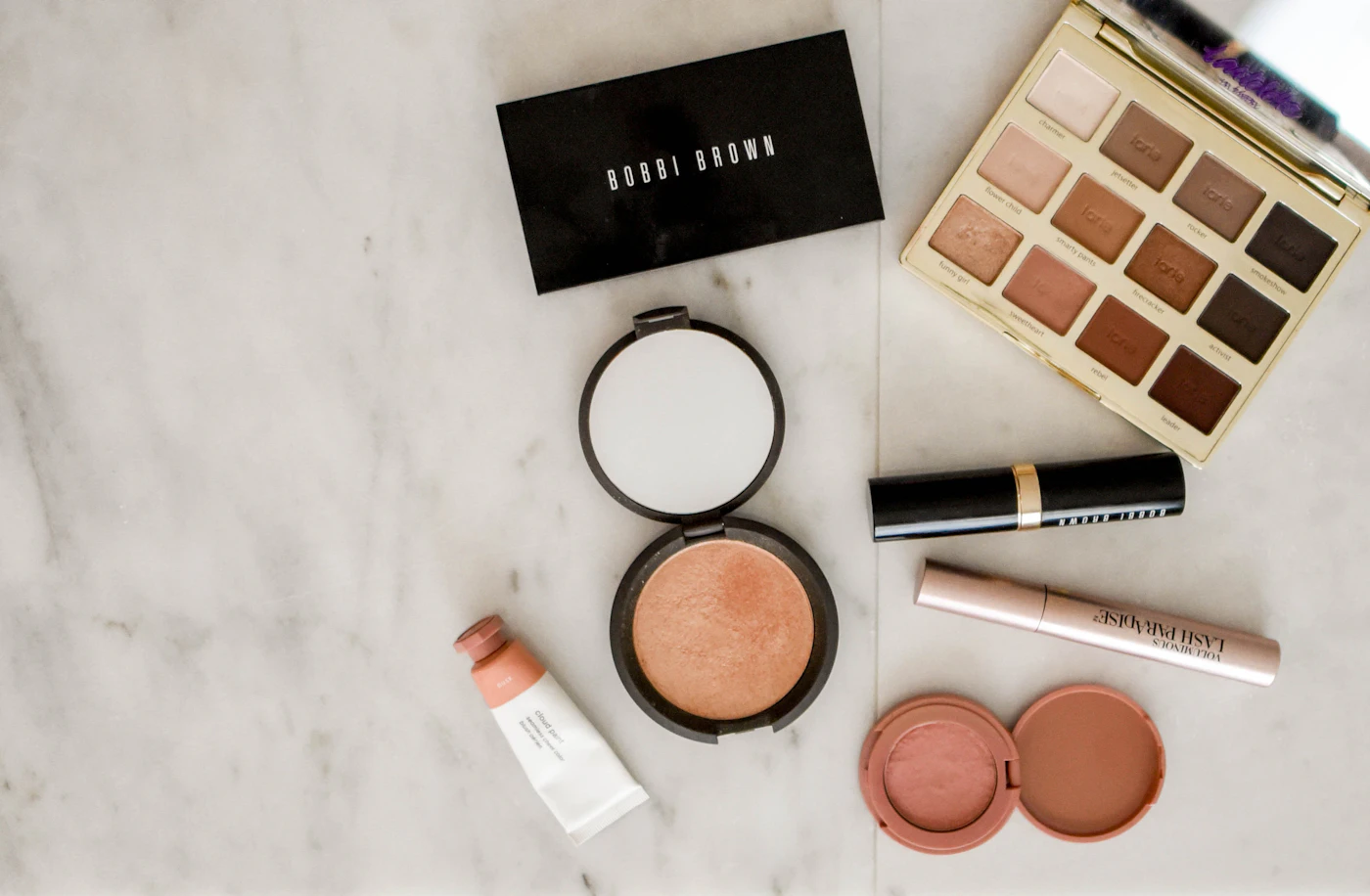
Finding the light the venue actually has
Ask two questions of the venue: where the ceremony photographs will be taken, and whether the room has windows. Daylight flatters almost everyone, but photographing with a window behind you flattens the face, so knowing the direction of the light before the day means the makeup can be built for it.
Candlelight and flash pull in opposite directions. Candlelight swallows contrast, so blush and lip need to be slightly stronger than the mirror suggests. Flash flattens soft color and brightens reflective surfaces, so a heavy shimmer or a strong under-eye powder will read badly. If the day runs from a lit ceremony into a candlelit dinner, test the full look in both lights rather than choosing one.
The face that lasts
Skincare the week before, not a new peel. Grip primer where you crease, a thin base, concealer only where you need it. Cream color under a light powder blush so cheeks survive a toast. Lashes that are lifted, not heavy enough to drop by vows. A lip liner close to the lipstick, blotted, with the bullet in your bag.
Build the base in thin layers rather than one heavy one. A thin base with a gripping primer sits better through the day than a full-coverage foundation, which creases wherever the face moves. Set only the areas that will shine, and leave the cheeks with some life so the face does not photograph flat.
Color that survives a long day
- Blush: cream first, set with a matching powder, placed slightly higher than usual so candlelight can find it.
- Eyes: a satin or matte shadow in a warm brown, a soft liner tight to the lash, and lashes that are curled rather than heavy.
- Brows: groomed and filled only in the gaps. A strong brow survives a photograph better than a strong eye.
- Lip: a liner close to the shade, filled, then a satin bullet blotted. Avoid a wet gloss that vanishes on the first kiss.
- Avoid: heavy glitter, which flares in flash, and very pale nudes, which disappear entirely in candlelight.

The lip strategy
The lip is the part most likely to need attention during the day, and the part you can most easily fix yourself. Line and fill with a long-wear pencil close to your lip color, blot, then apply a satin or long-wear bullet. Take the pencil and the bullet with you, and top up the center of the lip rather than repainting the whole mouth.
If you plan to kiss, eat, and talk all day, a stain underneath the color means something remains when the top layer leaves. That single step is the reason a wedding lip still looks intentional at the end of the evening, rather than a faint outline.
Day-of composure
Sunscreen in the trial and on the morning, even indoors near windows. Blot, do not pile powder. Mist, then leave it. Nothing new the week of. For the long version, read the wedding makeup guide. Pretty at the aisle. Still yours at the last dance.
Keep a small touch-up bag with one person you trust: blotting papers, the lip, a translucent powder, and a cotton bud. The bag does not need to be big. Almost everything that goes wrong on the day is shine, lip color, or a smudge, and all three take under a minute to fix.
Wedding makeup for different roles
- The bride: trial everything, photograph it in the venue light, and keep the look close to what you already wear.
- A bridesmaid: ask the artist to match the group but keep your own brow and lip shape, so you still look like yourself in the photographs.
- A guest: a satin base, cream blush, a defined lip, and nothing you have not worn for a full day before.
- A mother of the bride or groom: keep it comfortable and photograph it in daylight, since most of the pictures happen before the evening.
What to avoid
Avoid a new product on the day, a new facial or peel in the week before, and any trend you have not photographed. Avoid heavy powder under the eye and strong shimmer, both of which read badly in flash. Avoid a matte liquid lip if you want to eat comfortably, and avoid a hairstyle or makeup the artist will not be present to maintain. If your artist is leaving before the reception, plan which three things you can fix alone.
The short version
Trial the look in the light of the venue and photograph it with and without flash. Skincare the week before, a gripping primer, a thin base, cream blush set lightly, lashes lifted rather than heavy, and a lip with a liner underneath that you can reapply yourself. Nothing new on the day. Pretty at the aisle, still yours at the last dance.